Identify
The product, distinctive visual features, ownership, development history and intended markets.

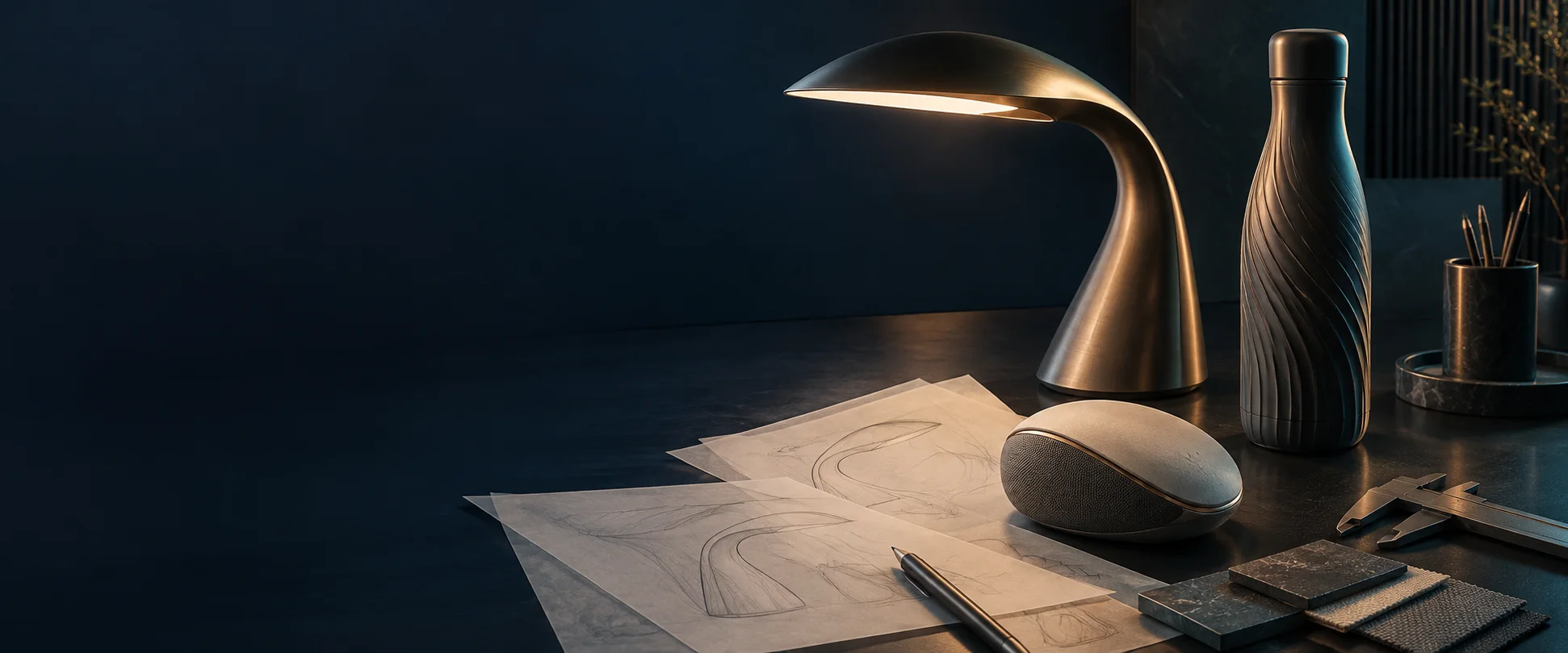
Legal protection and commercial strategy for the visual features that set products apart.
Shape, configuration, pattern, ornamentation, lines, colours and other visual characteristics can create meaningful commercial distinction.
IntellexEmpire assists designers, startups, manufacturers and product-driven organisations in identifying, protecting, managing and enforcing industrial design rights.
Industrial design protection generally focuses on visual appearance rather than a product’s technical function.
Move across or select each feature to see how visual appearance can be considered. Protection depends on the product, representations and applicable law.
Indian design protection and coordinated international strategy shaped around products and launch plans.
Review the registered-design landscape and potential issues before a filing or product launch.
+Identify the visual features that matter and prepare a filing strategy around them.
+Address examination issues while preserving the commercially important appearance of the design.
+Keep protection aligned with product families, release plans and geographic expansion.
+Evaluate imitation or unauthorised use against the registration, evidence and commercial context.
+Use registered designs as meaningful assets within a broader business and IP strategy.
+Design rights are territorial. For protection outside India, IntellexEmpire assists with strategy and coordinates with appropriately qualified foreign counsel or associates where required.
The product, distinctive visual features, ownership, development history and intended markets.
Registered designs and available design information for conflicts and context.
Products, variations, jurisdictions, launch plans and commercial objectives.
Representations, classification and supporting documents through the chosen route.
Objections, procedural requirements, amendments and registration matters.
Monitoring, renewals, portfolio integration and enforcement against unauthorised use.
Licensing, assignment, collaboration, transactions and product expansion.
A single product may involve several kinds of intellectual property, depending on its features and applicable law.
Shape, configuration, pattern, ornamentation and the overall appearance of an eligible article.
Qualifying functional innovations, technical solutions and how an invention works.
Distinctive signs such as brand names and logos that identify goods or services.
Qualifying original expression such as artistic, literary, musical and software works.
Protecting distinctive visual features before products enter the market.
Consumer products, devices, packaging, accessories and other design-driven products.
Product appearances across individual articles, product families and multiple markets.
Products whose appearance contributes to recognition and commercial differentiation.
Devices, equipment, components and other eligible product appearances.
Indian filings and coordinated multi-jurisdictional strategies where appropriate.
General guidance provides a starting point. The appropriate approach depends on the article, appearance, disclosure history, markets and applicable law.
An industrial design generally concerns the visual or aesthetic features of an article or product rather than its underlying technical functionality. The precise definition and requirements depend on the jurisdiction.
Potentially eligible products may include consumer goods, packaging, furniture, electronics, appliances, fashion-related articles, equipment, containers, accessories and other manufactured articles, subject to applicable law.
No. Design rights generally concern visual appearance, while patents generally concern qualifying inventions and technical functionality. Both may be relevant to the same product.
Public disclosure can affect design rights in some jurisdictions. A protection strategy should therefore be considered before disclosure, marketing, exhibition, sale or commercial launch.
No. Design rights are territorial. Protection elsewhere generally requires an appropriate filing strategy for the relevant jurisdictions.
Yes. Design rights may generally be licensed or assigned subject to applicable law, documentation and recordal requirements.
Available remedies depend on the law, scope and validity of the registration, the allegedly infringing product, evidence, jurisdiction and circumstances.
Speak with the IntellexEmpire Industrial Designs Team about searches, registration, prosecution, portfolio management, enforcement, valuation or international strategy.
Request a Design Consultation If the product has not been publicly disclosed, consider discussing confidentiality arrangements before sharing detailed or unpublished design materials through the general enquiry form.